

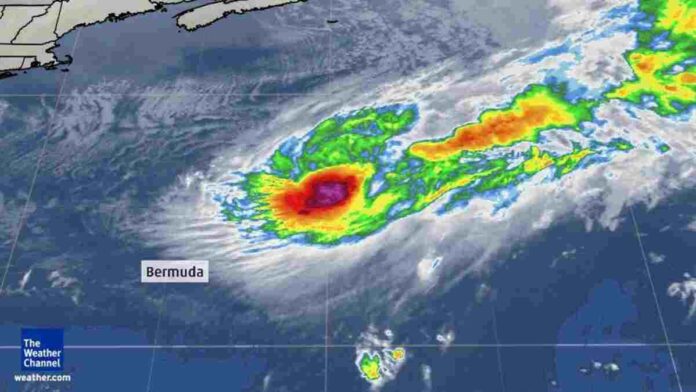
The 2026 Atlantic season continues with a rare lull as Tropical Storm Fay develops in the Atlantic. Fay is developing well south and east of the United States near the Azores and is the sixth named storm of the Atlantic.
Fay, as noted by the National Hurricane Center (NHC), was centered approximately 405 miles southwest of Azores at 220000Z, with maximum sustained winds of near 65 mph and a visible pattern. The system was moving slowly southeast, but was forecasted to turn southwest, and weakening was expected as Fay was forecasted to become a post-tropical cyclone within the next few days. No watches or warnings were issued for the system.
Fay’s formation has occurred in one of the most inactive times for the Atlantic hurricane season in modern history. The start to September in the Atlantic remained relatively quiet, with several weaker tropical storms but no hurricanes, although September is the heart of the peak part of the season. No hurricane formation this late had set a record in the satellite era.
A big reason why the tropics are so quiet is that a powerful El Nio is forming in the Pacific. El Nio affects the way the atmosphere moves around the globe and, just in the Atlantic, high-altitude winds are blowing faster across the tropics or blowing in different directions. That makes it more difficult for tropical systems to form and intensify.
El Nio was cited as something important in NOAA’s 2026 hurricane forecast calling for a below-average Atlantic season. The NOAA forecast stated that El Nio wind shear has a history of disrupting tropical storm development before they can intensify.
The thing is in particular significant in the months of August, September and October, when the Atlantic tends to reach its seasonal maximum. As the new forecast issued by the National Oceanic and Atmospheric Administration, El Nio conditions will continue to intensify through the peak season, leading to atmospheric conditions that favor less the formation of hurricanes.
Fay itself demonstrates the difference a named storm can make about a hurricane. Despite moving into tropical-storm strength, forecasters anticipated Fay would not reach hurricane status due to mild conditions. The latest National Hurricane Center advisory mentioned Fay was starting to weaken, with no land impacts anticipated.
Yet, while the open Atlantic is currently silent, it does not mean the whole tropical Atlantic is out of risk. With hurricane seasons turning very quickly and just one hurricane causing huge destruction if it hits a populated coast line, meteorologists still monitor tropical disturbances.
The anomalous Atlantic pattern is also coinciding with increased activity in some regions of the Pacific. El Nio may inhibit tropical cyclone development in the Atlantic while producing an environment more conducive for such activity in the eastern and central Pacific.
Fay is on track to remain over the open Atlantic for now and drift weaker without impacting the U.S. or Caribbean. Fay’s presence now gives us another named storm to an otherwise very quiet Atlantic season so far.