

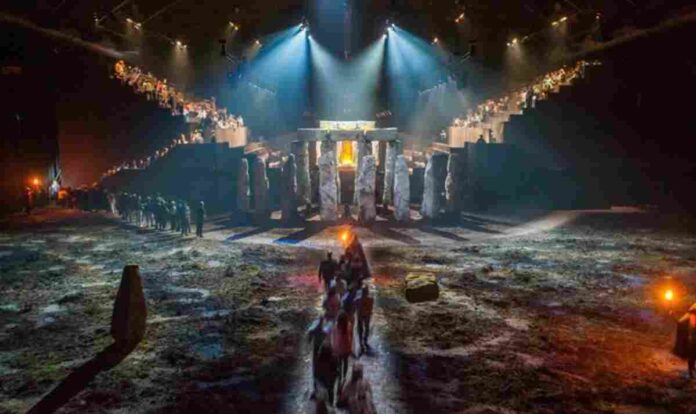
Oscar-winning screenwriter Roger Avary is making a bold return behind the camera with a ambitious new project. The Pulp Fiction co-writer and director of The Rules of Attraction has been tapped to write and direct a feature film adaptation of John Milton’s classic 1667 epic poem Paradise Lost for Ex Machina Studios, an emerging production company specializing in AI-driven filmmaking.
The announcement, made during the Cannes Market on April 29, 2026, signals a fresh attempt to bring one of literature’s most challenging and visually grand stories to the big screen. Paradise Lost, which recounts the biblical tale of the Fall of Man, Satan’s rebellion, and the temptation in the Garden of Eden, has long been considered nearly unadaptable due to its dense philosophical themes, enormous narrative scope, and demands for spectacular cosmic visuals.
Avary, who previously struggled to launch independent films in the traditional system, sees AI as a game-changing tool that can finally make such a massive passion project feasible. Ex Machina Studios, co-founded by producer Marco Weber (Igby Goes Down), is positioning itself as a leader in leveraging artificial intelligence to reduce costs and enhance creative possibilities in high-scale productions. Veteran production designer Kirk Petruccelli (Lara Croft: Tomb Raider) is attached as executive producer.
This marks Avary’s first major directing effort in over a decade and continues his recent embrace of AI technology. Earlier in 2026, he announced multiple AI-assisted films in active production through his own banner, including a family Christmas movie and a faith-based feature. Paradise Lost fits naturally into this slate, combining Avary’s sharp narrative instincts with cutting-edge AI tools for world-building, visual effects, and complex scene construction.
Industry observers note that Ex Machina Studios is quickly becoming a go-to destination for filmmakers seeking to realize ambitious, effects-heavy stories that might otherwise be prohibitively expensive. The company recently greenlit another ambitious project, Alex Proyas’ Heaven, further establishing its focus on AI-supported cinema.
While plot specifics and casting details remain under wraps, the adaptation is expected to emphasize both the epic scale of Milton’s vision and its profound exploration of free will, temptation, good versus evil, and redemption. Avary’s history of bold, character-driven storytelling suggests he will bring a fresh, modern edge to the material without losing its poetic power.
The project is still in early development, with production likely to lean heavily on AI for pre-visualization, concept art, and certain VFX sequences. This approach could dramatically lower barriers that have stalled previous Paradise Lost attempts over the years.
For Roger Avary, Paradise Lost represents both a long-held creative ambition and a statement about the future of filmmaking. As AI continues reshaping Hollywood, this collaboration with Ex Machina Studios could serve as a landmark example of how technology enables storytellers to tackle previously impossible projects.
Fans of literary adaptations and epic cinema will be watching closely as development progresses. With its blend of classical source material and forward-looking production methods, Avary’s Paradise Lost has the potential to become one of the most talked-about films of the coming years.